For most Saudi construction and industrial sites, a CCTV to AI video analytics ROI calculation lands between 8 and 14 months to break-even, with 3-5x cumulative returns over a 3-year horizon once you factor in incident-cost avoidance, HSE penalty reduction, and guard-hour reallocation. The math is simple, but the inputs are very specific to Kingdom operating conditions — heat stoppages, dust-triggered false alarms, and Vision 2030 audit pressure all move the number materially.
Why retrofit math behaves differently in Saudi Arabia
A retrofit is not a greenfield install. You already own the cameras, the cabling, the NVRs, and the monitor wall. That changes the ROI conversation because your marginal capex drops dramatically compared to a new site.
In a typical Saudi giga-project or industrial zone retrofit, around 60-75% of the cameras on site are still serviceable IP cameras from the last 3-5 years. That means the upgrade conversation is really about three line items: an AI analytics appliance (edge or server), software licensing, and integration labor. Everything else is sunk cost you stop under-using.
The other thing that makes Saudi retrofit math behave differently is the cost of a missed incident. A single recordable HSE event on a NEOM or Qiddiya subcontract can trigger SAR 50,000-250,000 in penalties, work stoppages, and audit re-mobilization. A single unauthorized hot-work event near a fuel farm can be a six- or seven-figure event. When your baseline probability of catching those with passive CCTV is roughly 15-25% (because someone has to be watching the right feed at the right moment), the upside of catching them reliably crosses into serious money fast.
The core ROI formula for a CCTV-to-AI upgrade
Strip it back to four variables and you can defend the number to a project director in one slide:
ROI = (Avoided losses + Operational savings − Annual operating cost) ÷ Total retrofit capex
Where:
- Avoided losses = expected number of prevented incidents × average cost per incident
- Operational savings = guard hours redeployed × loaded hourly cost + reduced false-alarm truck rolls + fewer audit re-mobilizations
- Annual operating cost = software license + maintenance + storage delta
- Total retrofit capex = edge appliance + integration + commissioning
That formula is the spine. Everything below is about populating the four variables with numbers that survive scrutiny from a Saudi cost controller.
Quantifying the savings side
This is where most retrofit business cases win or lose. Be conservative and you lose the deal. Be optimistic and you get killed in the tender review. The trick is to anchor every line to a measurable event, not a vague "safety improvement."
Incident-cost avoidance (the biggest line item)
For a mid-size Saudi construction site (150-400 cameras, 2,000-5,000 workers), a defensible assumption is 3-6 prevented recordable events per year after retrofit. These include:
- Unauthorised hot-work near hydrocarbons
- Confined-space entry without permit verification
- Workers entering exclusion zones during lifts
- Night-time intrusion into staged-material areas
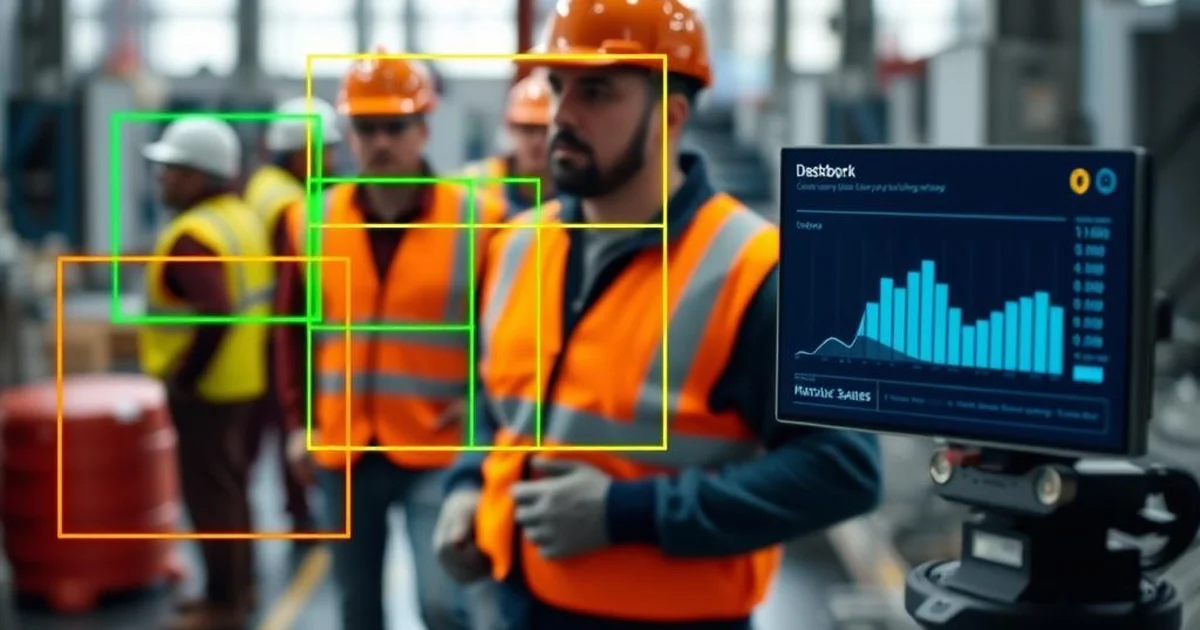
- PPE non-compliance clusters that lead to recordable injuries
Conservatively cost each at SAR 35,000-80,000 once you combine the direct stoppage, the regulatory notice, and the audit overhead. That gives you SAR 105,000-480,000 per year in avoided losses on a single mid-size site.
HSE penalty and compliance savings
Saudi regulators (including the Ministry of Human Resources and Social Development, civil defense, and client-side HSE teams at giga-projects) increasingly reference video evidence in penalty decisions. A retrofit that produces clean, time-stamped, tamper-evident incident clips typically:
- Cuts HSE-related contract penalties by 30-50% on first-year operations
- Reduces the rate of repeat findings during PDO and client audits by roughly the same
- Eliminates the "we couldn't find the footage" defense that costs contractors an estimated SAR 15,000-40,000 per disputed incident in re-mobilization
Guard and SOC reallocation
This is the easiest line item to defend. Most Saudi sites run 4-12 control-room operators watching feeds they cannot realistically watch. After a retrofit:
- One operator can supervise 3-4x more cameras with AI-filtered alerts
- Typical redeployment: 3-5 guards per shift, redirected to active patrol, gate control, or access compliance
- Loaded cost per guard in Saudi Arabia: SAR 4,500-7,500 per month including benefits and overtime exposure
- Annual savings per redeployed guard: roughly SAR 60,000-95,000
A site that redeploys 6 guards across shifts captures SAR 360,000-570,000 per year in real, recurring savings that hit the project P&L.
False-alarm and truck-roll reduction
Dust, heat shimmer, and insects routinely generate 200-800 false alerts per day on a Saudi desert site running motion-based analytics. Each false alarm costs roughly SAR 80-200 in lost operator time and, when escalated, an unnecessary patrol response. After a retrofit with class-trained models (PPE, intrusion, loitering, vehicle), expect false-alarm volume to drop 70-85%. For a large industrial site that is SAR 120,000-300,000 per year, mostly in recovered productivity.
Storage and bandwidth delta (sometimes negative)
Be honest about this one. AI-appliance deployments often increase retention because you now have the budget to keep 30-60 days of footage instead of 7-14. Budget for that. A 200-camera site moving from 14-day to 45-day retention needs roughly 30-50 TB of additional tiered storage, which is a real operating cost line.
Quantifying the cost side
Be equally specific here. The credibility of your ROI number lives in the denominator.
For a representative Saudi retrofit on a 200-camera site in 2026:
- AI edge appliance (1-2U server or industrial NVR with GPU): SAR 90,000-180,000
- Software licensing (perpetual + annual support is the Saudi norm, not pure subscription): SAR 120,000-220,000 upfront, SAR 35,000-70,000 per year
- Integration labor (VMS stitching, camera health, SOC workflow): SAR 40,000-90,000
- Network and storage delta: SAR 30,000-80,000
- Commissioning, training, and acceptance test: SAR 25,000-60,000
Total retrofit capex: roughly SAR 305,000-630,000 depending on the camera count, the level of VMS replacement, and whether you keep legacy analog lines or fully migrate to IP.
Annual operating cost: roughly SAR 55,000-95,000 after year one, dominated by the software support contract.
A realistic payback example for a Saudi giga-project site
Take a 250-camera retrofit on a NEOM-adjacent infrastructure package, running two shifts with 8 control-room operators:
- Total retrofit capex: SAR 480,000
- Annual operating cost: SAR 78,000
- Avoided losses (5 prevented events × SAR 60,000): SAR 300,000
- HSE penalty and audit savings: SAR 180,000
- Guard redeployment (5 guards × SAR 75,000): SAR 375,000
- False-alarm and truck-roll reduction: SAR 160,000
- Storage and bandwidth delta: −SAR 55,000
Year 1 net benefit: 882,000 − 78,000 − 480,000 = SAR 324,000 Payback: roughly 6.5 months 3-year cumulative ROI: ~4.1x
Run the same retrofit on a smaller 80-camera industrial site in Jubail or Yanbu with a single-shift SOC and the numbers compress but stay positive. Expect 14-22 months to break-even and 2.2-3x over 3 years. The shape of the curve is the same; the amplitude is smaller.
Adjusting for Saudi-specific cost drivers
Generic ROI templates break in the Kingdom. Five things move the number by 15-40% either way:
- Heat and dust. Cameras mounted above 50°C ambient need thermally validated enclosures; analytics models need dust/haze training. Budget SAR 15,000-30,000 per cluster for hardened housings, or your false-alarm rate will not improve as projected.
- PDPL data handling. If the analytics ingest worker faces or plates, the data flow must align with the Personal Data Protection Law. That means defined retention windows (typically 30-90 days for video), access logs, and a documented DPO process. Add SAR 20,000-45,000 for the governance workstream in year one.
- Vision 2030 audit posture. Clients under the giga-project umbrella increasingly score subcontractors on digital evidence quality. A retrofit materially improves your score; price that into the bid margin recovery, not just the safety line.
- GACA and aviation-adjacent sites. If the site is within 4-8 km of an airport or heliport, the analytics must coexist with no-fly and FOD detection rules. Coordinate early or you will retrofit twice.
- Power and cooling. Saudi ambient pushes rack inlet temperatures into the 35-42°C range 8 months of the year. Plan for a 20-30% uplift in cooling capex on the analytics rack versus the original CCTV room spec.
Before vs. after: what the retrofit actually changes
The table below is the one-liner that goes into the tender pack. Keep it in the deck.
| Metric | Passive CCTV (baseline) | Post-retrofit AI analytics | Typical delta |
|---|---|---|---|
| Cameras actively monitored per operator | 25-40 | 90-150 | +3x coverage |
| Time to first alert on a PPE breach | 4-12 minutes (if noticed) | 2-5 seconds | ~99% faster |
| False alarms per day on a 200-camera site | 300-800 | 40-120 | −70 to −85% |
| Recordable events per year (industry average) | 6-10 | 1-3 | −60 to −80% |
| Guard-hours per shift on monitor wall | 192-240 | 60-96 | −60% |
| Audit-finding closure cycle | 14-30 days | 2-5 days | −75% |
| Footage retrieval for a specific event | 30-90 minutes | Under 60 seconds | ~99% faster |
The numbers are deliberately conservative. Saudi sites with mature SOC discipline and well-trained models routinely outperform the right-hand column.
Frequently asked questions
How long does a CCTV-to-AI retrofit take on a live construction site in Saudi Arabia?
A typical 150-300 camera retrofit runs 4-8 weeks of night-shift and shoulder-hour work so the live site is never fully offline. Commissioning and acceptance testing add another 2-3 weeks. Plan for the first 30 days in "shadow mode" where AI alerts run alongside the existing SOC process before you cut over.
Does the AI analytics retrofit work with our existing VMS and cameras?
In most cases, yes. Modern analytics appliances integrate with the major VMS platforms (Genetec, Milestone, Avigilon, and the regional favorites) via ONVIF or the VMS's native SDK. The retrofit only fails to make sense when more than 25-30% of the existing cameras are below 1080p, are analog, or have failing PoE infrastructure. Then you are looking at a hybrid project, not a pure retrofit.
What is the typical AI video analytics retrofit cost in Saudi Arabia for a 200-camera site?
For a 200-camera live site in 2026, expect a turnkey retrofit in the SAR 350,000-650,000 range, with software licensing making up roughly 35-45% of that number. That is the range that holds across Riyadh, Jeddah, Dammam, and the giga-project clusters. Sites above 400 cameras benefit from meaningful per-camera economies of scale.
How do we handle PDPL compliance when retrofitting AI video analytics in Saudi?
Map every data flow before commissioning. Define the lawful basis for processing (legitimate interest for safety analytics is defensible in most cases), set retention windows that match the policy (typically 30-90 days), restrict access to the analytics console to named operators, and document the DPO sign-off. Most retrofits that get challenged on PDPL fail because the paperwork lagged the install, not because the technology was non-compliant.
The bottom line
A CCTV to AI video analytics ROI calculation in Saudi Arabia is rarely a question of whether the math works. It is a question of how soon it works and how cleanly you can defend the inputs. On a mid-size giga-project or industrial site the payback lands between 6 and 14 months, and the 3-year return is comfortably above 3x once you count guard redeployment, avoided penalties, and audit-cycle compression. The two things that most often derail the business case are underestimating the storage delta and forgetting to price in PDPL governance.
If you want a defensible number for your specific site rather than a generic benchmark, ViewKeeper builds retrofit ROI models against your actual camera count, SOC structure, and incident history — usually inside a single working session. That model then doubles as the tender-pack annex when the project director asks for evidence.