Construction AI in Saudi Arabia is shifting from pilot project to contract clause in 2026, with NEOM, Qiddiya, and Diriyah now requiring AI-powered safety monitoring, drone-based PPE detection, and heat-stress analytics as bid prerequisites. Combined with PDPL enforcement, GACA drone rules, and a Vision Zero mandate from the Ministry of Human Resources, contractors without on-site AI analytics are already losing tenders in Riyadh, Jeddah, and the Eastern Province.
What "construction AI" actually means on a Saudi site
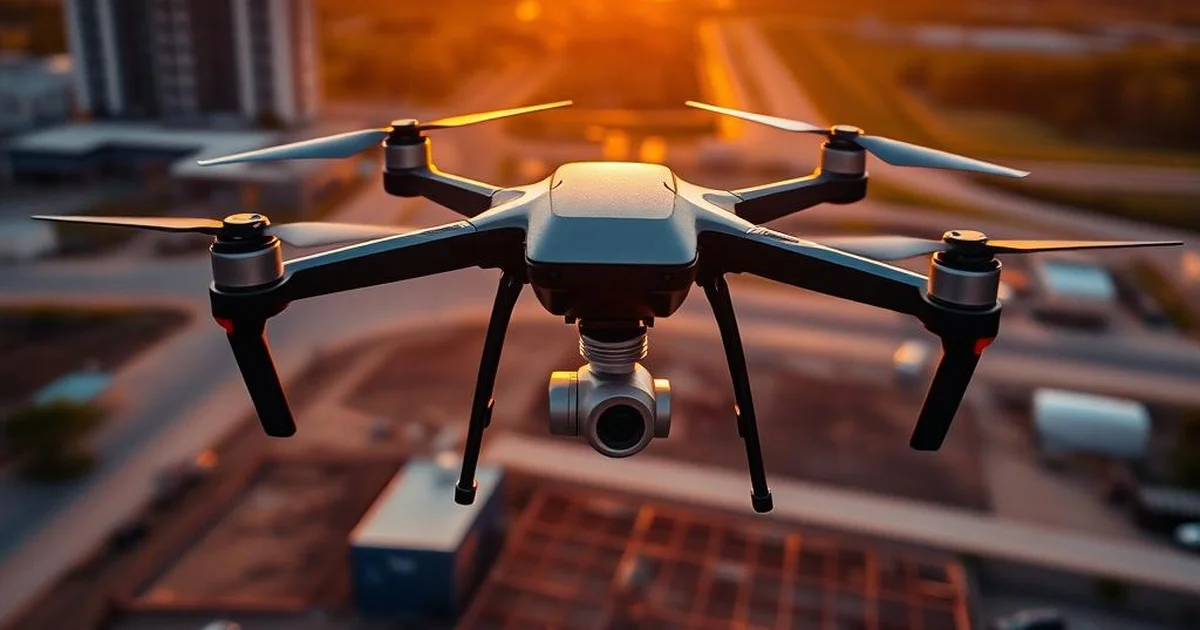
Construction AI in Saudi Arabia refers to the operational layer of computer vision, machine learning, and sensor fusion that runs across a jobsite — not the BIM model sitting in an architect's office. In practice, three technologies do the heavy lifting on 2026 sites: AI video analytics on fixed and PTZ cameras, drone-based aerial analytics, and wearable or edge sensors that feed a single HSE dashboard.
For Saudi projects, the stack typically looks like this: 4K IP cameras with on-device inference for PPE detection and proximity violations, GACA-licensed drones running LiDAR and photogrammetry for daily progress and stockpile volumetrics, plus wearable straps or badges that stream biometric data (heart rate, core temperature proxy) to a site-control room. The result is what HSE leads now call evidence-grade safety — a continuous, timestamped record that stands up in a Ministry of Labor audit or a court case.
The market signals are loud. Saudi Arabia's construction sector contributes roughly 8–9% of non-oil GDP and is on track to exceed SAR 500 billion in committed project value by 2026 across NEOM, Qiddiya, Red Sea Global, Diriyah, ROSHN, and Riyadh's downtown pipeline. When a single package at NEOM can be worth SAR 1.2 billion, owners no longer accept a paper-based safety file.
The 2026 trends reshaping Vision Zero in KSA
Trend 1: Drone-first PPE detection replaces manual gate checks
Manual gate inspections catch roughly 30–40% of PPE non-compliance on a typical Saudi site, according to peer-reviewed studies of construction safety audits. AI video analytics running on tower-crane cameras and gate-mounted IP cameras routinely push that figure above 95% accuracy within four weeks of calibration. The shift in 2026: gate supervisors are being reassigned to behavioral coaching, while the camera does the binary "hard hat, harness, hi-viz, boots" check at 25 frames per second.
Trend 2: Heat-stress AI becomes a legal duty, not a nicety
Summertime ambient temperatures in Riyadh, Hofuf, and the NEOM Tabuk corridor hit 45–50°C between June and September. The Ministry of Human Resources and Social Development, working with the Saudi Red Crescent Authority, has tightened heat-stress protocols and now expects digital records of work-rest cycles, hydration breaks, and biometric thresholds. AI models that fuse ambient temperature, WBGT (wet-bulb globe temperature) feeds, and worker heart-rate data can predict heat exhaustion 10–15 minutes before clinical symptoms appear. On a 5,000-worker site, that is the difference between a near-miss log and a Section 33 violation.
Trend 3: PDPL-compliant edge AI replaces cloud-only surveillance
Saudi Arabia's Personal Data Protection Law (PDPL), enforced by SDAIA since September 2024, classifies facial imagery and biometric data as sensitive personal data. That classification has killed several foreign SaaS pitches on Saudi sites in 2025. The 2026 pattern: contractors are buying edge-AI cameras that anonymize faces at the silicon level, store no biometric template in the cloud, and run inference locally on the NVR. The project stays inside the PDPL envelope while still delivering the safety signal.
Trend 4: GACA-licensed autonomous drone corridors for daily progress
GACA's 2024 drone regulation update created a path for BVLOS (beyond visual line of sight) operations on declared construction corridors, subject to operator licensing and a geo-fenced flight plan. NEOM and Red Sea Global were among the first to register permanent drone corridors in 2025. By 2026, daily drone flights deliver orthomosaics, cut-fill volumetrics, and crane clearance checks in under 90 minutes — work that used to consume two surveyors a full day.
Trend 5: Digital-twin and BIM integration closes the safety loop
The Saudi Building Code and the PIF-backed giga-projects increasingly require a federated digital twin that links the BIM model, the schedule (Primavera P6 or MS Project), and live site telemetry. When a 4D simulation shows a crew scheduled inside an active crane swing radius, AI raises a Stop-Work alert before the lift begins. This is where construction AI in Saudi Arabia is pulling ahead of European and US benchmarks, because the giga-project owners are writing the integration into the EPCM contract.
How Saudi giga-projects are actually buying AI
Procurement has standardized. Here is the typical 2026 buyer's matrix:
| Capability | Typical deployment | Bid-document language | Owner expectation |
|---|---|---|---|
| PPE detection (helmet, harness, hi-viz) | Tower-crane + gate cameras, 24/7 | "AI-based PPE compliance monitoring with monthly accuracy report" | ≥95% detection accuracy, <5% false positive |
| Heat-stress monitoring | WBGT sensor + wearable + AI model | "Predictive heat-illness analytics integrated with work-rest schedule" | 10-min early warning, audit log for MoHR |
| Drone progress + volumetrics | Daily BVLOS flight, GACA-licensed operator | "Autonomous aerial survey with orthomosaic and cut-fill report" | Cloud-stitched model within 4 hours of flight |
| Proximity & exclusion-zone | AI video + geofenced BIM overlay | "Real-time proximity violation alerts logged to HSE system" | <2 second alert latency |
| PDPL data handling | On-device anonymization, edge inference | "Biometric data processed in KSA, no raw imagery to offshore cloud" | SDAIA-aligned data residency + DPIA |
If a Saudi contractor cannot meet four of the five rows above, they will be commercially non-competitive on 2026 giga-project bids. The major EPCMs — El Seif, Al-Bawani, Almabani, Nesma, Al-Rashid Trading & Contracting — have already issued internal AI deployment targets for the 2026 project cycle.
The road map a Saudi contractor should actually follow
- Start with a 30-day PPE-detection pilot on one tower. Fix 4–6 cameras at the gate and the crane, run edge AI, log violations, and benchmark against manual gate counts. Most Saudi pilots reach 90% accuracy by week two and 95% by week four, if camera angles are tuned for Saudi sun glare (lens hoods matter more here than in Europe).
- Layer heat-stress analytics before summer 2026. WBGT sensors are cheap — SAR 3,000–6,000 per unit. Combine them with existing site attendance data, and a basic ML model can flag workers exceeding thresholds well before the Ministry of Labor does its July inspection sweep.
- Pick a PDPL-native stack from day one. Confirm with the vendor: where is the inference running? Where is the biometric template stored? Can the system run if the cross-border cloud link is cut? If the answer involves "we send raw video to Frankfurt," walk away.
- Register your drone corridor with GACA early. Lead time is 6–12 weeks for a permanent BVLOS authorization. Submit the geo-fence, the operator CVs, and the emergency-contingency plan together — GACA rejects partial filings.
- Wire the AI output into the digital twin, not a separate dashboard. HSE managers already have 4–7 dashboards. The 2026 winners push AI alerts into the same Primavera, Autodesk Construction Cloud, or Oracle Primavera environment the project team already lives in.
What this looks like in a real Saudi number set
On a representative 1,200-worker NEOM package, an AI safety overlay typically delivers:
- 35–50% drop in reportable near-misses within the first 90 days, because unsafe acts are interrupted, not just recorded.
- 60–70% reduction in time spent on incident investigation and root-cause paperwork.
- 15–25% productivity uplift on repetitive tasks like rebar and formwork, because AI scheduling cuts the waiting time on shared equipment.
- Audit-ready digital evidence that has already shaved multi-week delays off PDPL-related client sign-offs.
The ROI math is straightforward: a single fatal incident on a Saudi giga-project in 2026 can trigger a 30–90 day site stand-down, a SAR 5–15 million direct cost, and a blacklisting event that removes the contractor from the next three bid lists. AI safety monitoring pays for itself the first time it prevents one of those.
Frequently asked questions
What is the best construction AI use case to start with in Saudi Arabia?
For most Saudi contractors, gate and tower-crane PPE detection is the highest-value first deployment. It produces a measurable KPI (compliance %), integrates with the existing gate pass system, and generates the audit-grade video evidence the Ministry of Human Resources asks for during routine inspections.
Is drone-based site monitoring legal in Saudi Arabia?
Yes, provided the operator is GACA-licensed, the drone is registered, and the flight plan is filed through the GACA portal. For BVLOS operations on construction corridors, you also need a site-specific authorization and a geo-fence file in the GACA format. Operating a drone over a giga-project without these is treated as a civil aviation violation, not a workplace one.
How does PDPL affect AI video analytics on a construction site?
PDPL classifies facial images and biometric data as sensitive personal data. That means contractors must (1) anonymize faces at the camera level, (2) avoid storing identifiable footage outside the Kingdom, and (3) keep a Data Protection Impact Assessment on file. Edge-AI cameras that run inference locally are the cleanest way to satisfy all three.
Does AI safety monitoring actually reduce injuries, or just paperwork?
The 2024–2025 data from regional and global deployments shows a 30–50% drop in recordable incidents and a 60–70% drop in the time spent on incident paperwork. The mechanism is behavioral: workers who know the camera is watching wear the harness. The paperwork is the byproduct, but the behavior change is the driver.
The bottom line
Construction AI in Saudi Arabia in 2026 is no longer a competitive advantage — it is a contract gate. Vision Zero commitments from NEOM, Qiddiya, and the Ministry of Human Resources, combined with PDPL enforcement and a 48°C summer, mean that AI video analytics, drone corridors, and heat-stress models are now table stakes on any serious Saudi giga-project bid.
ViewKeeper delivers GACA-compliant drone surveying and PDPL-aligned AI video analytics built for Saudi construction. From tower-crane PPE detection to daily aerial volumetrics on NEOM and Red Sea sites, our edge-AI stack runs inside the Kingdom and integrates directly with your BIM and HSE systems. Book a 30-minute site walkthrough and we will show you, in your own camera angles, what 2026 compliance looks like.